Nashville Airbnb Design: What’s Next? Goodbye Millennialcore and Hello Gen-Z Vibes
Let’s be honest about the Nashville short-term rental market: it is incredibly saturated.
If you bought an investment property here during the massive 2020 boom, you probably followed a very specific, highly lucrative formula to make your listing "pop". You know the one. The "Nashville Uniform." It’s an over-the-top, hyper-saturated explosion of neon signs, pink cowboy boots, faux ivy walls, and giant Dolly Parton posters.
I’m not dissing it. For a long time, that formula worked like magic. It was the ultimate bachelorette party aesthetic, copy-and-pasted across hundreds of listings in East Nashville and the Gulch.
But a funny thing happens when everyone copies the exact same playbook: the premium vibe becomes a basic commodity.
Today, those listings are starting to look tired, dated, and formulaic. If your booking rates are beginning to stall, it isn’t a fluke—it’s a symptom of two major shifts colliding at once.
First, let's look at the commercial reality: just like boutique hotels, premium retail spaces, and high-end restaurants, short-term rentals operate on about a five-year lifecycle. If your property is still rocking the exact same look it launched with in 2020, you have officially hit the expiration date of that design cycle. The materials are worn, the aesthetic has reached peak saturation, and the market has completely moved on.
Second, and even more critical for your bottom line, your target demographic has completely flipped.
You are no longer trying to catch the eye of the traveler from five years ago. You are targeting a brand-new wave of Gen-Z travelers who have entirely different tastes, higher expectations for authenticity, and a sharp eye for design. When you combine a tired, end-of-cycle property with an aesthetic that completely misses your primary spending demographic, your listing doesn't just look old—it becomes financially invisible.
The Generational Shift in Your Booking Queue
The absolute top demographic of tourists traveling to Nashville right now—by a massive margin—is Gen Z. They are driving the bachelorette parties, the girls' trips, and the weekend getaways.
And if you know anything about consumer trends, you know one universal truth: Gen Z absolutely hates "Millennial ick."
Yet, almost every saturated, neon-heavy, pink-painted Airbnb in Music City was designed by Millennials, for Millennials. It’s what we call Millennialcore—and to a 23-year-old booking a trip today, it takes exactly one scroll to spot it, call it "cringe," and swipe past it.
If you want to command premium luxury rates in a crowded market, you cannot keep offering yesterday's trends to tomorrow's primary spending demographic. The "Nashville Uniform" is officially dead. To understand where the market is going, we have to look at how we got here.
The "Copy-and-Paste" Epidemic
To understand how saturated our market has truly become, take a look at the image below.
Disclaimer: To protect the innocent, this image was created using AI by analyzing real, active Nashville short-term rental listings and generating a composite example of the current market standard.
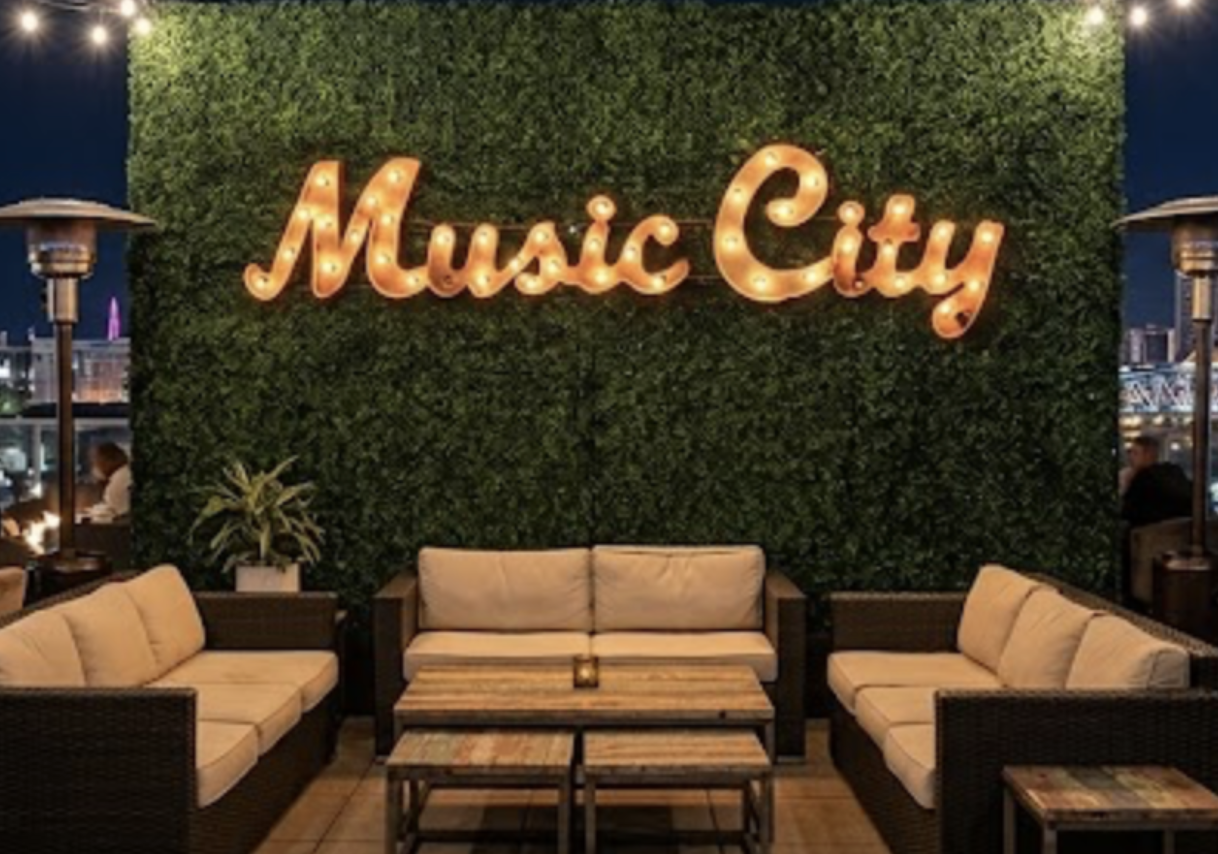
If you’ve browsed Airbnb listings in Music City anytime over the last few years, this photo looks intensely familiar. It could quite literally be any rooftop or patio in town. The faux-greenery wall, the glowing marquee "Music City" sign, the standard brown wicker sectional—it’s an entire aesthetic built on a manufacturing line.
Why do so many of our listings look exactly like this? Because a massive wave of Nashville properties were bought, furnished, and launched at the exact same time. Everyone looked at what was working at that precise moment, copied it, and called it a day.
Evolution Phase 1: The Minimalist Rebellion
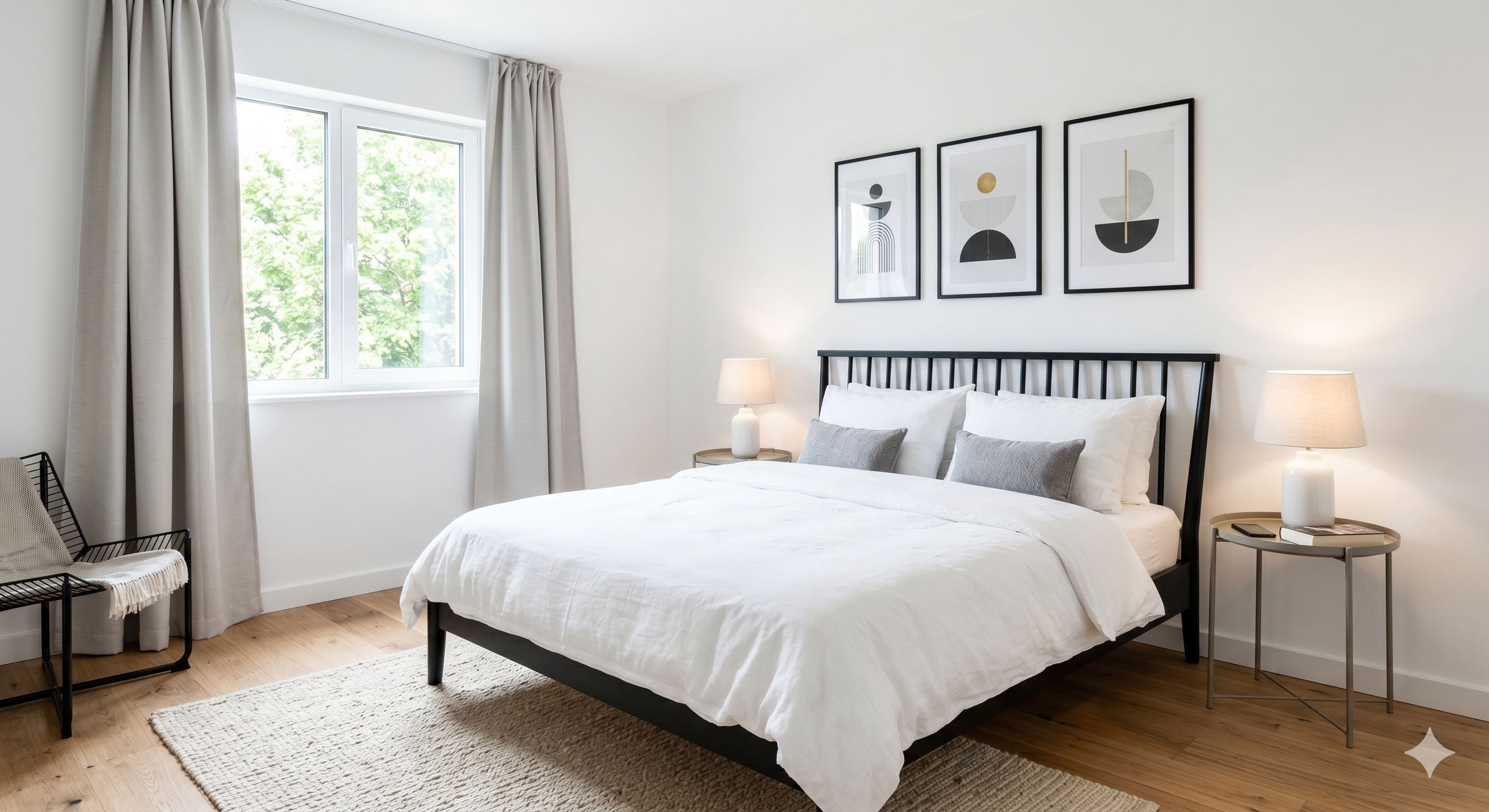
Before the neon signs took over, there was an earlier phase of Airbnb design.
Look at this bedroom. This is a standard, clean, modern Airbnb style room. This was considered absolute best practice years ago when competition was increasing just enough that you couldn't have hand-me-down, mismatched furniture anymore—but competition wasn't steep enough that you really needed to "stop the scroll."
This style appealed fiercely to Millennials because we were actively revolting against the ugly beige, maroon, and brown clunky designs of the early 2000s that defined our parents' living rooms (grapevine wallpaper border, anyone??).
Millennials dove headfirst into modern, organic, boho, and farmhouse styles—but it was all very all-white, neutral, safe, and minimalistic. To Gen Z, this HGTV-flip, "Live Laugh Love" energy feels completely invisible. It signals nothing. It belongs to no one.
Evolution Phase 2: "Slap an STR Mural On It"
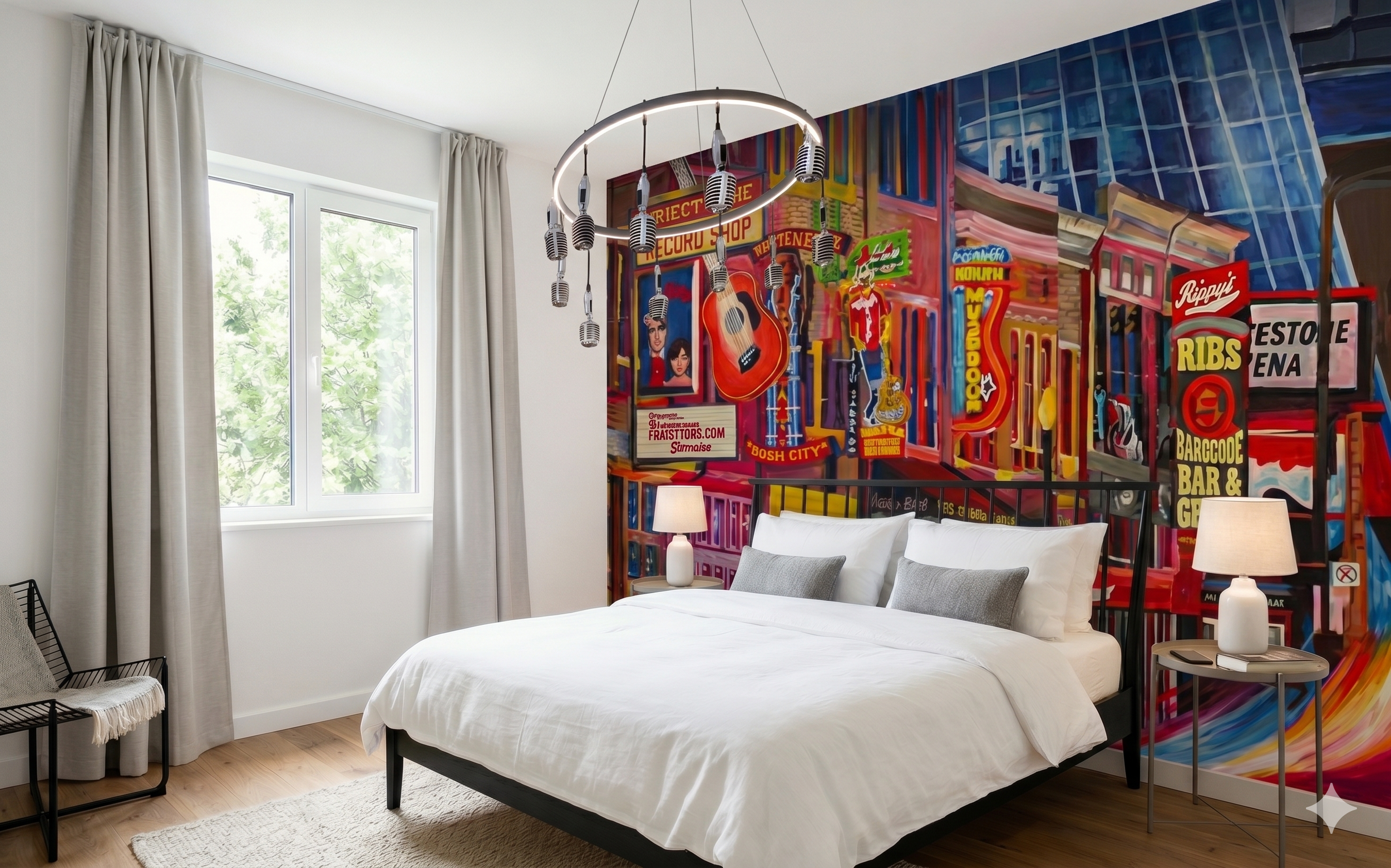
Then, Airbnb started absolutely booming. Hosts quickly figured out that white walls and beige linen weren't catching eyes on a phone screen anymore. Bright colors caught attention and stopped the scroll.
The industry consensus instantly became: "Let's add a mural!" or a bold accent wall, or some forced country "funkiness" to the listing.
Listen, I am not innocent here. I have designed a few Nashville Airbnbs where the recipe was cowboy boot wallpaper, leather butterfly chairs, and gold drum coffee tables. Maybe a painted ceiling if I was feeling really bold!
But here is the problem: we still have a massive sea of Airbnbs in Nashville that look exactly like this. They are screaming Millennialcore, and our Gen-Z travelers can sniff that forced, superficial design out from a mile away. They don't want a cookie-cutter corporate backdrop; they want genuine style.
Millennialcore vs. Gen-Z Vibes: The 2026 Shift
Gen Z doesn't book a room; they book a brand. They aren't looking for a generic place to sleep; they are looking for an intentional space that tells a story they want to be part of—and post about. That means free User-Generated Content (UGC) and organic marketing you quite literally cannot buy.
So, what is actually winning the algorithm right now? It is not the rainbow chaos and cheap plastic furniture of five years ago. What is current is more mature, more textured, and frankly, more luxurious.
Here are the four distinct Gen Z design directions that beautifully translate into an elevated, high-yield short-term rental:
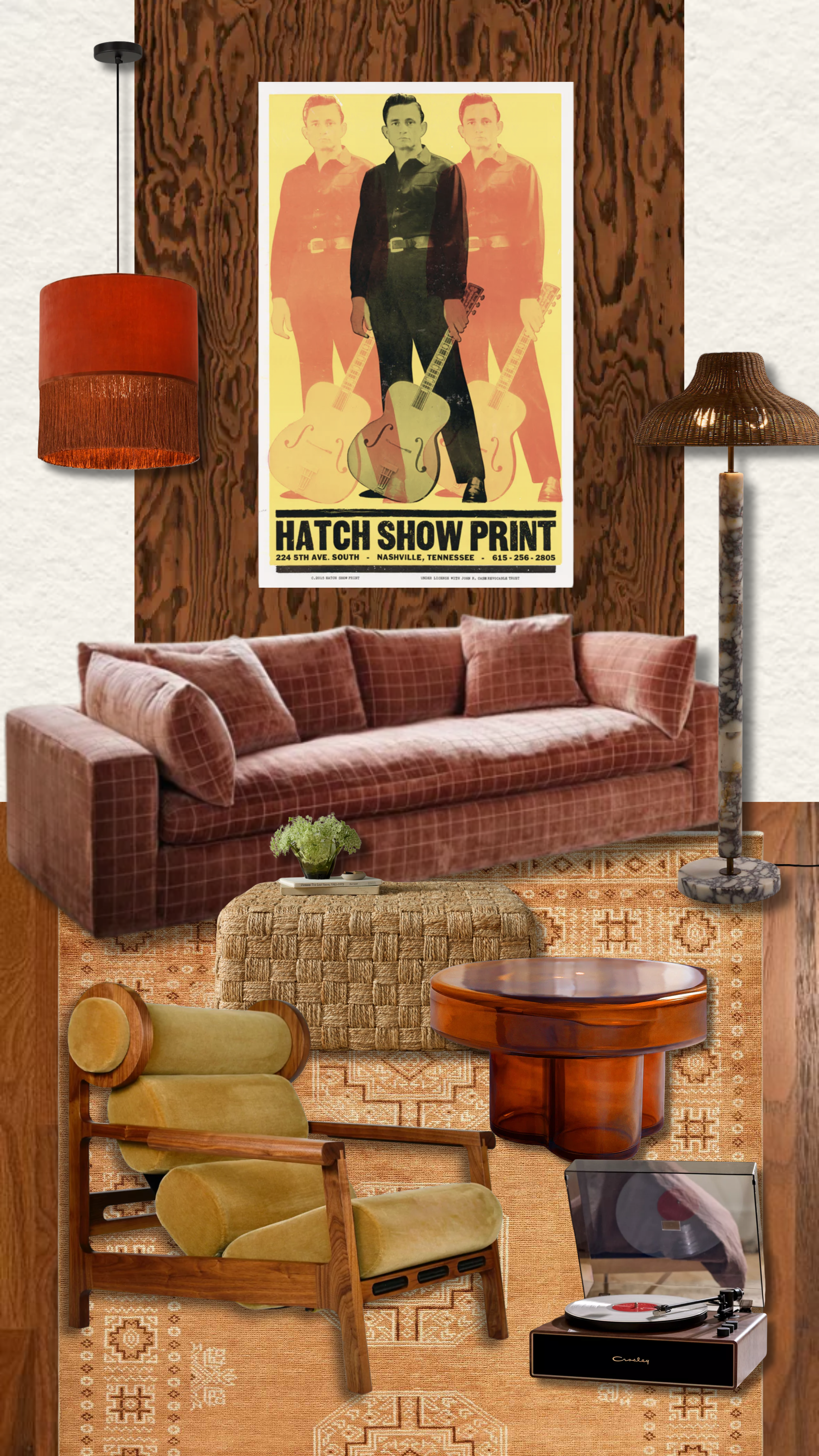
1. Throwback vibes (The '70s–'90s Resurgence)
The Vibe: This is the ultimate "curated and eclectic" sweetness. It balances mixed eras, warm earthy tones, and unexpected "wow" moments that feel collected over time rather than staged from a catalog.
The Elements: Terracotta, rich walnut wood, rattan, curved velvet sofas, and genuine vintage finds paired with sleek modern elements.
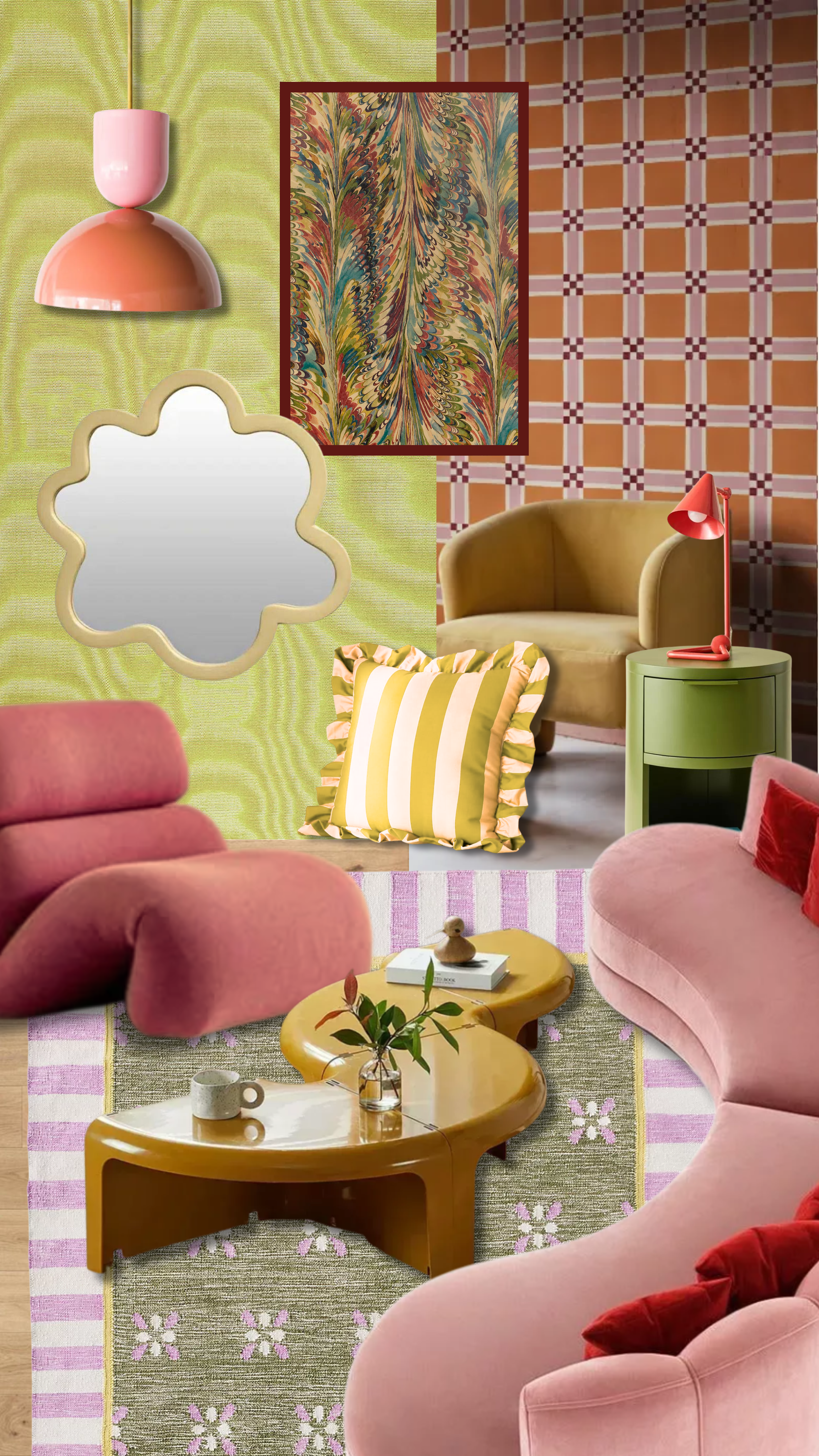
2. Dopamine Decor (The Bold & Curated Art Kid)
The Vibe: This is the evolution of the bold-color Airbnb—but grown up. Instead of a rainbow explosion, it features highly intentional color blocking and sophisticated palettes that create immediate emotional resonance.
The Elements: Statement art, architectural lighting used as sculpture, and rich, saturated jewel tones like electric blue, chartreuse, or deep burgundy.

3. Quiet Luxury (Gen Z Meets High-End)
The Vibe: The ultimate anti-2020 look. It feels incredibly expensive without trying—completely devoid of loud patterns, focusing instead on beautiful, timeless restraint with a sharp modern edge.
The Elements: Bouclé, linen fabrics, natural marble stone, and warm brass accents that patina beautifully over time.
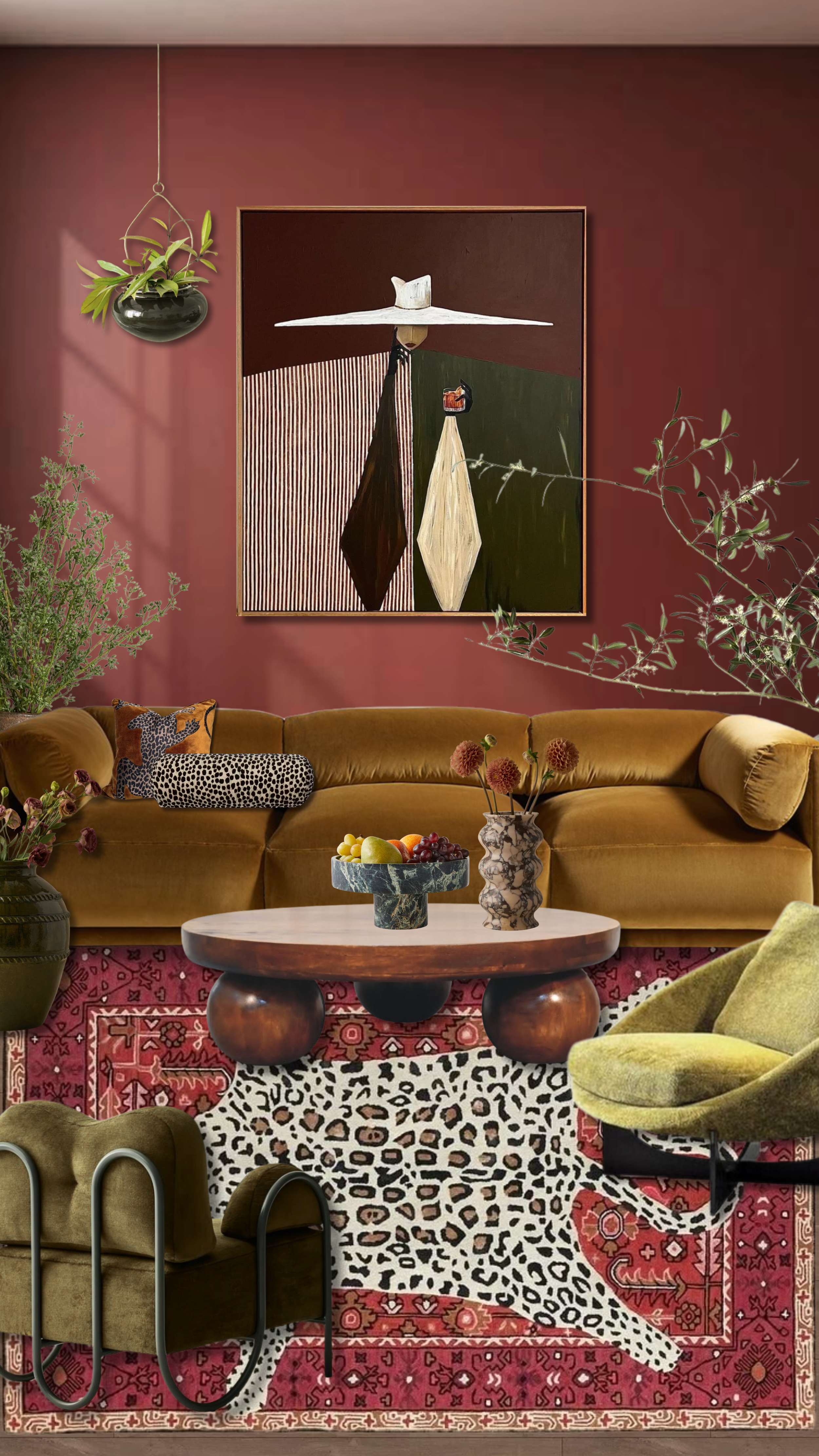
4. Moody Maximalism
The Vibe: It’s sexy, moody, dark, and rich. A place you’d want to have a cocktail and read a book, even though you’ll probably just have the cocktail. It feels contemporary and vintage all at the same time = the type of curation Gen-Z adores.
The Elements: Sculptural furniture, rich fabrics, bold and dark paint colors, animal prints, colorful marble
The Bottom Line
Every single one of these winning styles has a clear, ownable aesthetic point of view. Not a "nice place to stay," but an identity a guest can describe in a single sentence.
If your Nashville Airbnb is still rocking the exact same aesthetic it launched with during the boom, it is already overdue for a change. Heading toward a Gen Z-informed, brand-forward aesthetic isn't just a trend play—it is the single most competitive business move you can make in the current Nashville market. And YES, of course we can still add in those music-city elements that help your Airbnb scream Nashville. Let’s just scream it in Gen-Z’s language.
Stop blending in. Let's build an actual hospitality brand that dominates the scroll.
If you’re ready to completely hand over the logistics and take your property "Full Send," let’s connect.